The Dawn of a New Energy Era: Securing Our Future
As of June 28, 2026, the global energy landscape is at a critical inflection point. The urgent imperative to decarbonize our economies, coupled with growing energy demands and geopolitical volatilities, has accelerated an unprecedented wave of innovation in energy production and delivery. We stand on the precipice of a transformative shift, where next-generation energy solutions and robust grid modernization are not merely aspirational goals but essential pillars for a stable, sustainable, and prosperous future.
This isn't just about cleaner air; it's about energy security, economic competitiveness, and building infrastructure resilient enough to withstand the challenges of the 21st century. The path forward is clear: embrace the cutting-edge technologies that promise abundant, reliable, and carbon-free power, and fortify the grids that deliver it to every home and industry.
Next-Gen Energy Solutions: A Diverse and Powerful Portfolio
The vision for our future energy system is one of diversity and resilience, built upon a foundation of advanced technologies that complement each other.
The Renewable Revolution Continues
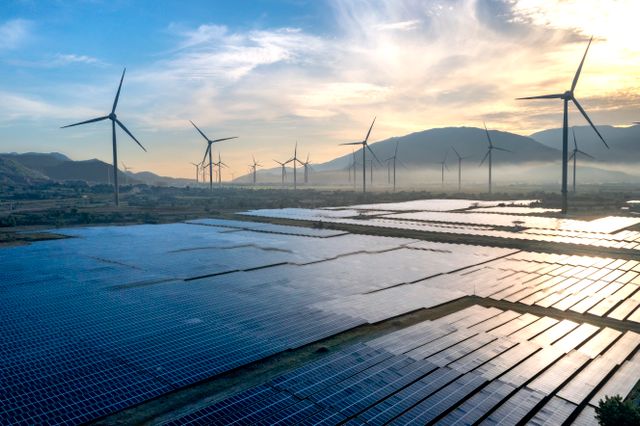
Solar and wind power, once niche players, are now central to global energy strategies. Thanks to relentless innovation, their efficiency has soared, and costs have plummeted, making them the most economically competitive new sources of electricity in many regions. Breakthroughs in photovoltaic materials and turbine design continue to push boundaries, while offshore wind farms are scaling to unprecedented capacities, harnessing powerful maritime winds.
"The rapid deployment of renewable energy is a testament to human ingenuity and our collective commitment to a sustainable future. It's no longer a question of 'if' but 'how fast' we can transition." - Dr. Anya Sharma, Lead Energy Analyst, Global Climate Initiative.
The Promise of Small Modular Reactors (SMRs)
Alongside renewables, Small Modular Reactors (SMRs) are emerging as a game-changer for reliable, carbon-free baseload power. These advanced nuclear reactors offer inherent safety features, a smaller physical footprint, and the flexibility to be deployed in diverse locations, including remote communities or industrial complexes. Their modular design promises faster construction times, lower capital costs, and enhanced scalability compared to traditional large-scale nuclear plants. SMRs are poised to provide the consistent, high-density power crucial for industrial processes and grid stability, complementing the intermittent nature of many renewables.
Revolutionizing Energy Storage: Batteries and Beyond
The Achilles' heel of renewable energy – intermittency – is rapidly being overcome by advancements in energy storage. Lithium-ion batteries continue to dominate grid-scale applications, with densities increasing and costs decreasing annually. However, the innovation doesn't stop there. Solid-state batteries promise even greater safety and performance, while flow batteries offer long-duration storage ideal for seasonal shifts and grid balancing. Beyond electrochemical solutions, breakthroughs in green hydrogen production and long-duration thermal storage are providing diverse pathways to store vast amounts of energy, ensuring power is available whenever and wherever it's needed.
Grid Modernization: The Intelligent Backbone of Our Energy Future
Even the most advanced energy sources are ineffective without a robust, intelligent, and secure delivery system. Grid modernization is the crucial parallel effort that transforms our aging infrastructure into a dynamic, resilient, and efficient network.
Building Resilience and Security
Modern grids are designed with resilience at their core. This means not only hardening physical infrastructure against extreme weather events – a growing concern in a changing climate – but also fortifying digital defenses against sophisticated cyber threats. Advanced sensors, automated fault detection, and self-healing capabilities ensure quicker recovery from outages, minimizing disruption to essential services and economic activity.
Seamless Integration of Distributed Energy Resources
The traditional one-way flow of electricity from large central power plants is giving way to a more decentralized model. Modern grids are designed to seamlessly integrate a multitude of distributed energy resources (DERs), including rooftop solar, community batteries, and electric vehicle charging stations. Smart grid technologies, enabled by advanced metering infrastructure (AMI) and artificial intelligence, facilitate two-way power flow, demand-response programs, and optimized energy distribution, turning consumers into active participants in the energy market.
Unlocking Efficiency and Economic Benefits
A modernized grid is an inherently more efficient grid. Reduced transmission losses, precise load balancing, and predictive maintenance driven by data analytics translate into significant cost savings for utilities and consumers alike. Furthermore, the investment in smart grid infrastructure stimulates economic growth, creating high-skilled jobs in engineering, software development, and construction, while enhancing energy independence and reducing reliance on volatile fossil fuel markets.
The Path Forward: Investment, Innovation, and Collaboration
The transition to next-gen energy solutions and a modernized grid requires substantial investment, forward-thinking policy, and unwavering collaboration between governments, industries, and research institutions. The benefits, however, far outweigh the challenges. We are building an energy system that is cleaner, more reliable, more secure, and ultimately, more equitable for all.
By championing these advancements, we are not just addressing climate change; we are forging a future where energy scarcity is a relic of the past, and sustainable prosperity is within reach for generations to come. The time to invest in our energy future is now.
| Metric | Value |
|---|---|
| Global Renewable Capacity | 5,100 GW+ |
| Grid-Scale Battery Storage | 200 GW+ |
| SMR Designs in Development | 80+ |
| Annual Smart Grid Investment | $95 Billion |
Key Facts
- Global renewable energy capacity is projected to exceed 5,100 GW by the end of 2026, marking a 150% increase from 2020 levels.
- The average cost of grid-scale lithium-ion battery storage has fallen by over 90% since 2010, making it increasingly viable for grid stabilization.
- Over 80 Small Modular Reactor (SMR) designs are currently under active development globally, with several expected to begin construction or operation by the late 2020s in North America and Europe.
- Global investment in smart grid technologies and infrastructure is projected to reach approximately $95 billion annually by 2026, driven by decarbonization and resilience needs.
- Electric vehicles (EVs) are projected to account for 20% of global new car sales by 2026, necessitating significant grid upgrades and smart charging infrastructure.
References
- Renewable Energy Market Update 2026 (International Energy Agency (IEA))
- World Energy Transitions Outlook 2026 (International Renewable Energy Agency (IRENA))
- Advancing Grid Modernization: A National Imperative (U.S. Department of Energy)
- Small Modular Reactors (SMRs) Information (World Nuclear Association)
- Energy Storage Outlook 2026 (BloombergNEF)