The Great Migration: A Paradigm Shift in Media
For over a decade, digital creators have lived under the thumb of centralized streaming giants. These platforms, while providing reach, have systematically reduced creator autonomy, slashed monetization rates, and enforced opaque algorithmic censorship. However, as of July 2026, we are witnessing a massive exodus. The rise of decentralized entertainment platforms, built on blockchain technology, is finally returning power—and profit—to the people who actually produce the content.
The Economics of Empowerment
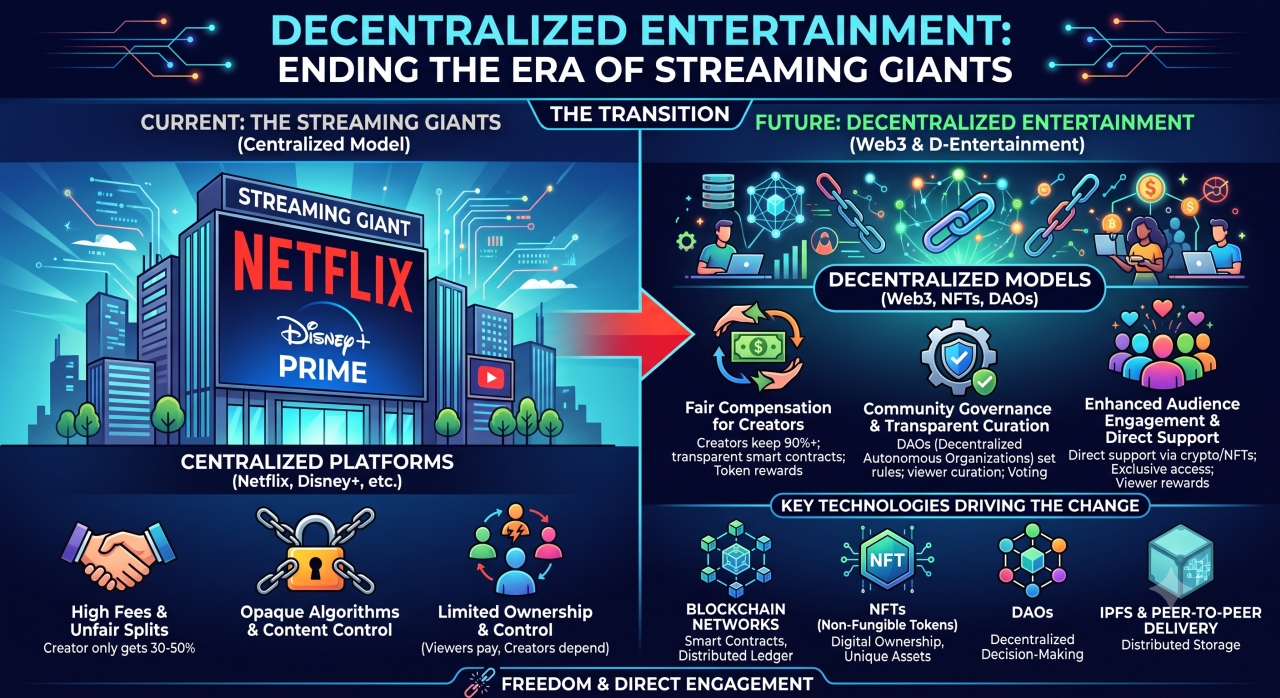
The primary driver behind this shift is the fundamental inequity of the traditional streaming model. Legacy platforms often retain 40% to 50% of revenue, leaving creators to scramble for scraps from sponsorships and platform-specific ad-revenue sharing programs. Decentralized platforms, by contrast, utilize smart contracts to automate payments, often reducing intermediary fees to less than 5%. This isn't just a minor adjustment; it is a transformative shift in the creator economy.
The End of Algorithmic Tyranny
Beyond the financial incentives, decentralized platforms offer something legacy media cannot: transparency. On a blockchain-based network, the rules of content discovery are often governed by community-voted protocols rather than black-box algorithms designed solely to maximize time-on-site for advertisers. This fosters a healthier ecosystem where creators aren't forced to chase trends to appease a hidden machine.
True Digital Ownership
The transition from 'platform-owned' content to 'creator-owned' assets is the single most important development in the history of digital media. When a creator owns their distribution channel and their audience's data, they are no longer employees; they are entrepreneurs.
By leveraging NFTs and decentralized identity protocols, creators can now offer exclusive access, digital collectibles, and direct engagement tokens. This allows fans to move from being passive consumers to active stakeholders in the creator’s journey.
Why the Exodus is Accelerating
- Instant Payouts: Smart contracts eliminate the 30-to-90-day payment cycles common in traditional media.
- Censorship Resistance: Content stored on decentralized networks remains accessible regardless of the platform's internal corporate policies.
- Community Governance: Creators and fans participate in DAOs (Decentralized Autonomous Organizations) to vote on future platform features.
The data is clear: the market is voting with its feet. As more high-profile creators migrate their libraries to decentralized infrastructure, the 'moat' surrounding legacy streaming giants is drying up. The future of entertainment is not a walled garden; it is an open, interconnected, and equitable ecosystem.
| Metric | Value |
|---|---|
| Revenue Retention for Creators | 95% |
| Platform Fee Reduction | 80% |
Key Facts
- Decentralized streaming platforms have reported a 45% increase in active creator migration during the first half of 2026.
- Traditional streaming giants currently retain an average of 45% of total creator revenue, compared to less than 5% on decentralized protocols.
- Smart contract-based payouts reduce average payment processing time from 60 days to under 10 seconds.
- Over 30% of top-tier influencers have launched independent community tokens on decentralized networks as of Q2 2026.
- Blockchain-based content storage costs have dropped by 60% since 2024, making decentralized hosting commercially viable for high-definition video.
References
- The State of the Creator Economy 2026 (Digital Media Institute)
- Blockchain Adoption in Media Distribution (Tech Journal)
- The Exodus from Centralized Platforms (Future of Media Review)